
Rs. 30 Lakh compensation to families of workers who lost their lives
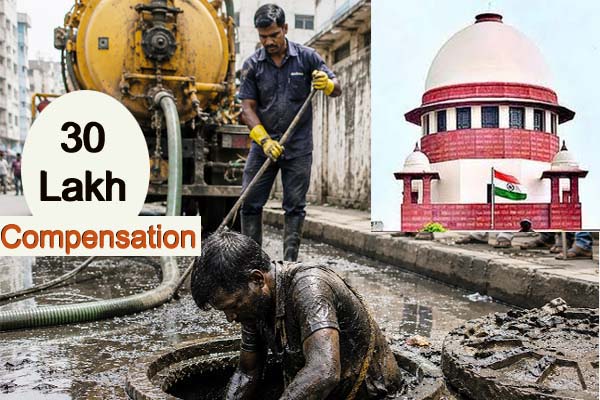
The Supreme Court has directed strict enforcement of its order providing compensation of Rs.30 lakh to the families of workers who die while manually cleaning sewage or septic tanks. The Supreme Court clearly stated in its directive that states and officials who fail to comply with its orders will be taken seriously. Let’s find out what else the Supreme Court has to say on this matter.
During the hearing, the Supreme Court examined reports filed by 15 states, which detailed compensation to the families of the deceased employees, registration of FIRs, and initiation of criminal proceedings against those responsible for the deaths.
The court found that in some cases, information about compensation approval was provided, but it was unclear whether the families had received the money. In some cases, the status of FIRs being filed was also unclear. Following this, the court directed the concerned states to submit a new report within four weeks.
As directed by the Supreme Court, states must report whether families received compensation, whether FIRs were filed, and what further action was taken against the perpetrators. The Supreme Court also clarified that if an employee dies while working for a private contractor or a private institution, the state cannot shirk responsibility.The state must ensure that the victim’s family receives compensation. The state can then recover this amount from the responsible party. It’s worth noting that reports of workers who died in septic tanks continue to emerge from various parts of the country.
The court also considered a model compensation scheme for sewer and septic tank workers, which was prepared in consultation with the Ministry of Social Justice and Empowerment.The proposed plan includes reporting deaths or disabilities caused by sanitation, filing FIRs, providing legal assistance to victims’ families, and ensuring timely disbursement of compensation. The court has given the concerned states another opportunity to address their deficiencies and asked them to submit additional reports within four weeks.(UPDATED ON 29TH OCTOBER 2026)