
India Will Safeguard Its Security and Strategic Autonomy When Threatened
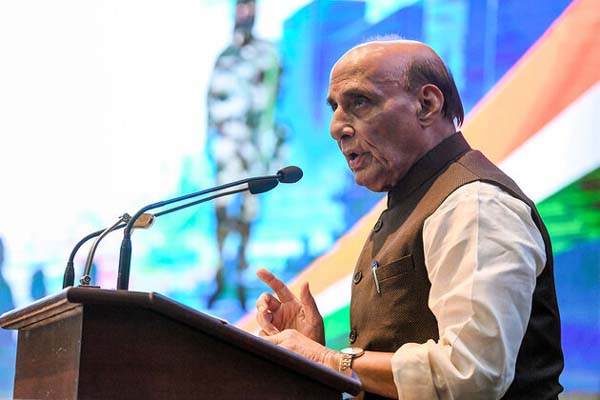
“India believes in peace and does not seek to occupy the territory of any country. However, peace should not be mistaken for weakness. We seek global stability, but not at the cost of our strategic autonomy. We are firmly committed to safeguarding our security and strategic autonomy when threatened,” said Raksha Mantri Rajnath Singh while addressing a Defence Conclave in New Delhi on September 27, 2026.
Raksha Mantri underlined that there can be no scope for dialogue with any country that promotes terrorism against India. “Countries that use terrorism as an instrument of state policy or provide shelter and support to terrorists must be firmly reminded that terrorism cannot be a strategic asset for any nation. He asserted that as long as a neighbouring country continues to pursue a policy of supporting terrorism, India remains fully entitled to take all necessary measures against terrorism”, he said, referring to Prime Minister Shri Narendra Modi’s remarks at the recent SCO meeting.
Emphasising national unity as a key pillar of national security, the Raksha Mantri stated that the security of the country is not solely the responsibility of the armed forces but a collective responsibility of every citizen. He urged citizens to rise above divisions based on religion, caste, creed, language, region and other identities, and to place national interest above personal and narrow interests.
Raksha Mantri concluded that India’s objective is to build indigenous capabilities across the entire defence spectrum—from individual components to complete weapon systems—and to develop technologies domestically rather than remain dependent on imports. He stressed that this approach is aimed at strengthening strategic autonomy, defence preparedness and a resilient indigenous defence-industrial ecosystem.(updated on 27th Sept. 2026)